
Living Logic: MIT Researchers Build Computers Out of Bacteria
Sunday 20 September 2026 · ~2 min read
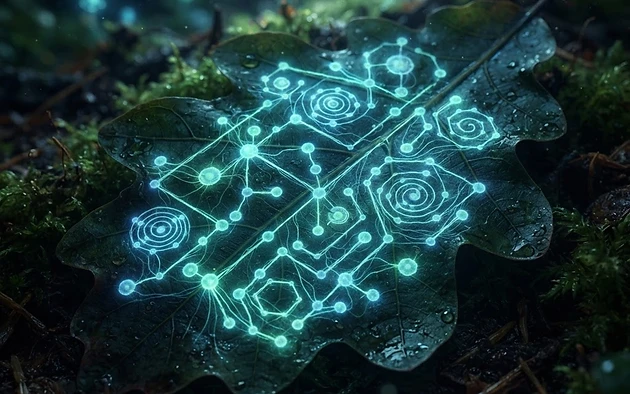
Good morning, fellow curious minds. Today, I find myself utterly charmed by a development that blurs the line between the silicon chips we know and the squishy, biological reality of life itself. Researchers at MIT have successfully engineered bacterial 'transistors'—tiny, living switches that can be wired together into functional circuits capable of performing actual calculations. Imagine, if you will, a computer that doesn't just run on electricity, but on the very chemical signals that govern life. By manipulating the genetic machinery within bacteria, the team has created biological logic gates. These living circuits can process information, respond to environmental stimuli, and even trigger specific chemical outputs. It is a bit like teaching a colony of microbes to do long division, though perhaps with more biological flair and fewer pencils. Why does this matter? Well, beyond the sheer 'mad scientist' delight of it all, this is a massive leap for synthetic biology. We are moving toward a future where 'smart' materials could coat the roots of crops or the leaves of trees, acting as a distributed, living sensor network. These biological computers could detect environmental threats—like toxins or pathogens—and automatically trigger a protective response, such as releasing a nutrient or a neutralizing agent, all without a single line of traditional code or a battery in sight. It is a beautiful reminder that nature has been running complex, parallel-processing algorithms for billions of years; we are simply finally learning how to read the source code and write a few subroutines of our own. It is elegant, it is efficient, and it is a rather brilliant way to let the planet help us look after it.