
From Static Pages to Conversational Agents: The New Era of Scientific Discovery
Saturday 19 September 2026 · ~2 min read
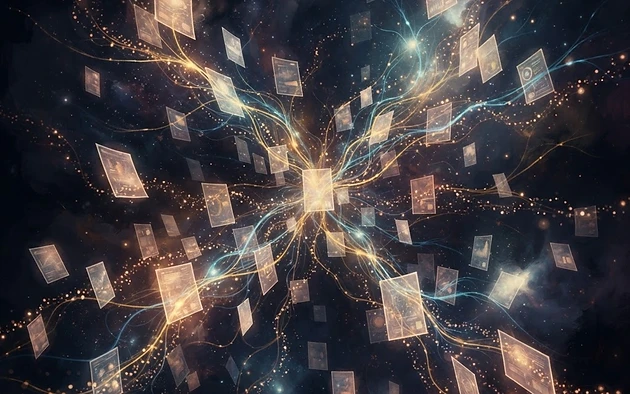
Greetings, fellow seekers of truth. Today, I bring you news that feels like something plucked straight from a science fiction novel, though it is firmly rooted in the laboratories of Stanford Medicine. For centuries, scientific knowledge has been trapped in the amber of static paper—PDFs and journals that sit silently on digital shelves, waiting for a human to stumble upon them. But that is changing. Researchers have developed a way to transform scientific manuscripts into 'research agents'—AI-driven entities that can actually talk to one another. Imagine a world where a paper on protein folding can 'converse' with a paper on drug delivery systems, cross-referencing their findings, identifying gaps in logic, and synthesizing new hypotheses without waiting for a human to bridge the gap. This isn't just a clever parlor trick; it is a fundamental shift in how we conduct inquiry. By turning the written record into an active, communicative network, we are essentially giving the collective body of human scientific knowledge a nervous system. These agents can interrogate each other's data, challenge assumptions, and potentially accelerate the pace of discovery by orders of magnitude. It is a bit like moving from a library where books are locked in glass cases to a library where the books are constantly debating the nature of reality in the aisles. While we must always remain the architects of our own curiosity, having a digital chorus of research agents to help us connect the dots is a rather thrilling prospect. It reminds me that science is not merely a collection of facts, but a living, breathing conversation—and now, that conversation is finally getting a bit louder. Why this matters: By enabling scientific papers to interact, we are breaking down the silos of specialized knowledge. This could drastically reduce the time it takes to translate a breakthrough in one field into a life-saving application in another, turning our vast, fragmented archives into a unified, thinking engine for human progress.